A living landscape shaped by water, wildlife and community care.
This field sits on the edge of Newenden, bordered by the Rother and the bridleway. What you see today is the result of steady, seasonal work — restoring a mixed meadow of grasses, wildflowers, wet ground and open paths that change with every month.
Where You’ll Find Us
A Quiet Patch of Kent Countryside
The meadow lies south of the village, between Lossenham Lane and the River Rother. A mown path runs around the field, with views across the wildflower areas and the wetter ground where frogs and fritillaries appear in spring. It’s open to visitors all year — boots recommended after rain.
The meadow works in seasons, and so do we. Each phase brings its own tasks and rhythms — from early-spring forage plants to summer flowering and autumn seed-set. Here’s the simple shape of the year:
Spring New growth returns: daffodils, fritillaries, early vetches, frogs in the wet patches. We weed thistles and docs, plant new plants and start mowing the paths.
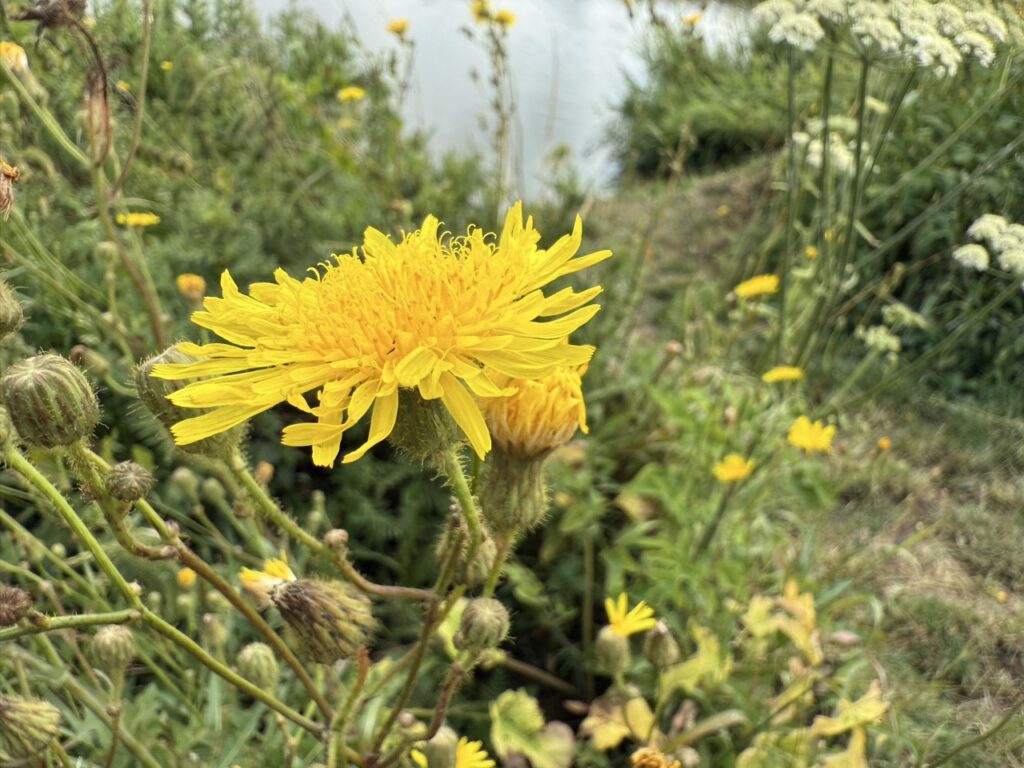
Summer The field is at its fullest. Yellow rattle, knapweed, wild carrot and meadow vetchling come into flower. Bees, moths and butterflies are active, and surveys take place across the meadow.
Autumn Seeds drop, grasses dry, and the structure of the meadow becomes visible again. We remove any self-seeded willow, prepare the field for grazing, and clear the paths for winter.
Winter Quiet planning months. Floodwater may rise and fall. We prepare the next sowing patches and review what the year has taught us.
Small steps, repeated often, create lasting change.
The restoration began with a simple question: what would thrive here naturally?
With guidance from wildlife organisations and support from the Selmes Trust, the field is gradually returning to a mixed meadow:
Controlled cutting and haymaking
Targeted sowing of yellow rattle
Creating and maintaining wetland patches
Careful removal of invasive plants
Monitoring flora and fauna across the seasons
Opening paths for visitors
Every choice is made to support long-term biodiversity — not quick wins.
The Scrape: A Place of Water and Life
Where frogs, wetland plants and insects find shelter.
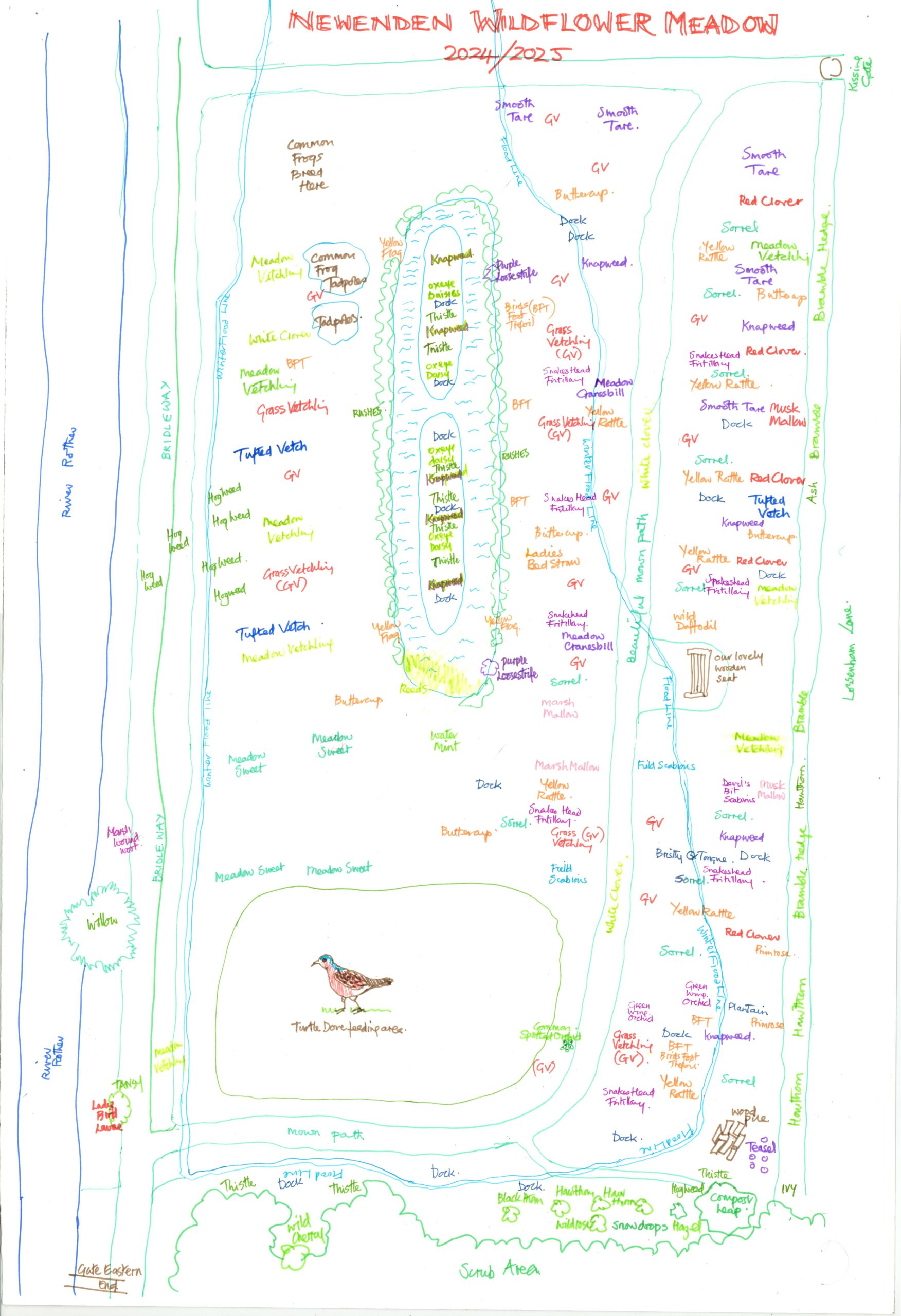
The central scrape is one of the meadow’s most active areas. In wetter months it fills, attracting frogs, emerging insects and moisture-loving plants. In dry spells, you can see the land’s contours and the paths that wildlife uses to cross it.
This small wetland is central to the meadow’s diversity — and is cared for with a light, seasonal hand.
Looking in the Future
Thoughtful improvements, added slowly and with purpose.
Future plans include:
Extending wildflower areas
Supporting turtle dove habitat with RSPB guidance
Trialling new patches for orchids and wetland plants
Refining the mown paths for easier access
Increasing opportunities for surveys and community learning
Nothing here is rushed. Each step is tested, observed and adapted.
A Meadow Cared for by Many
The Community at the heart of restoration.
Volunteers help with mowing paths, raking hay, planting, sowing yellow rattle and managing seasonal tasks. Their work keeps the project moving — and makes the meadow a shared place, not just a field.
A year-by-year record of how the field is changing.
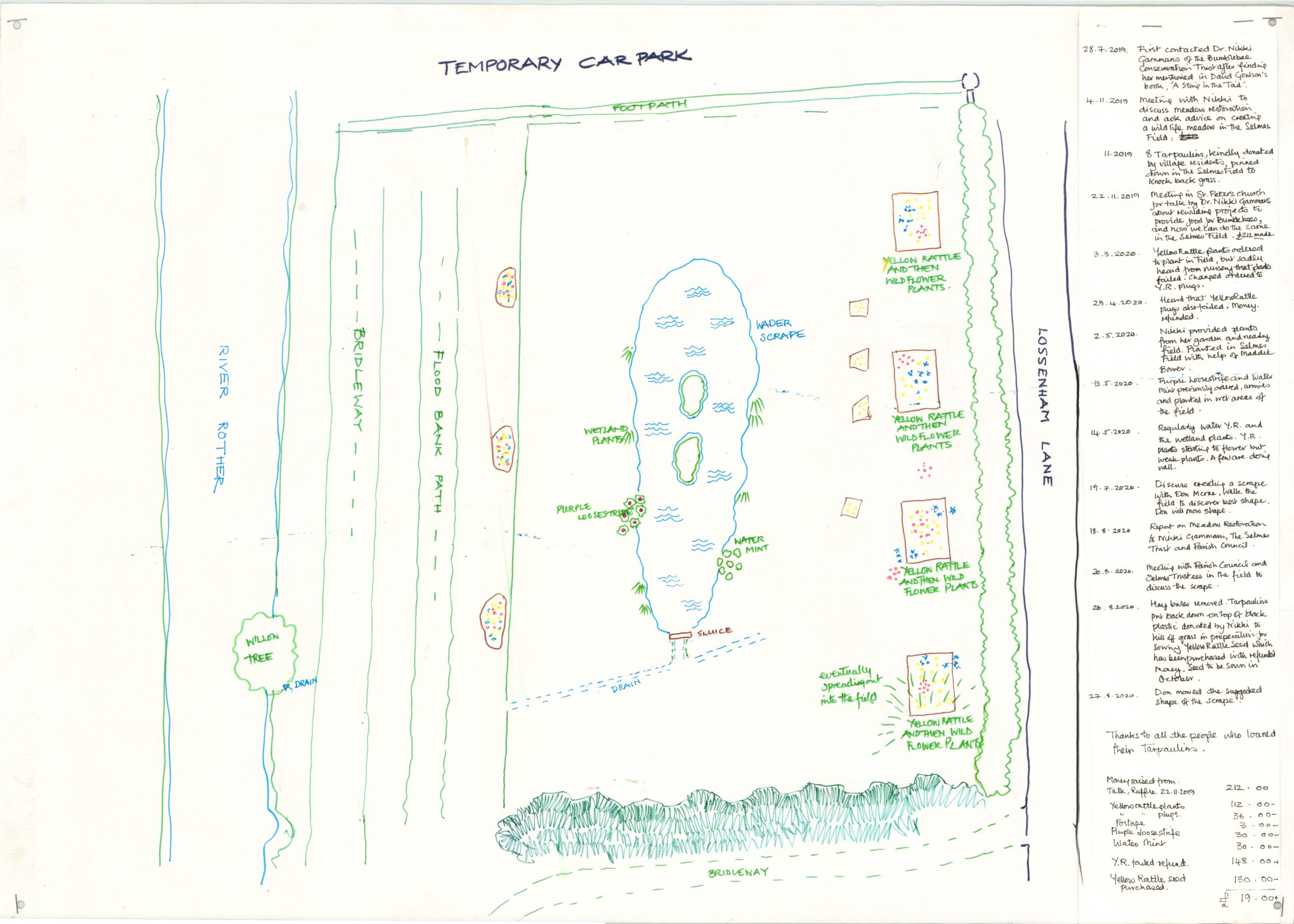
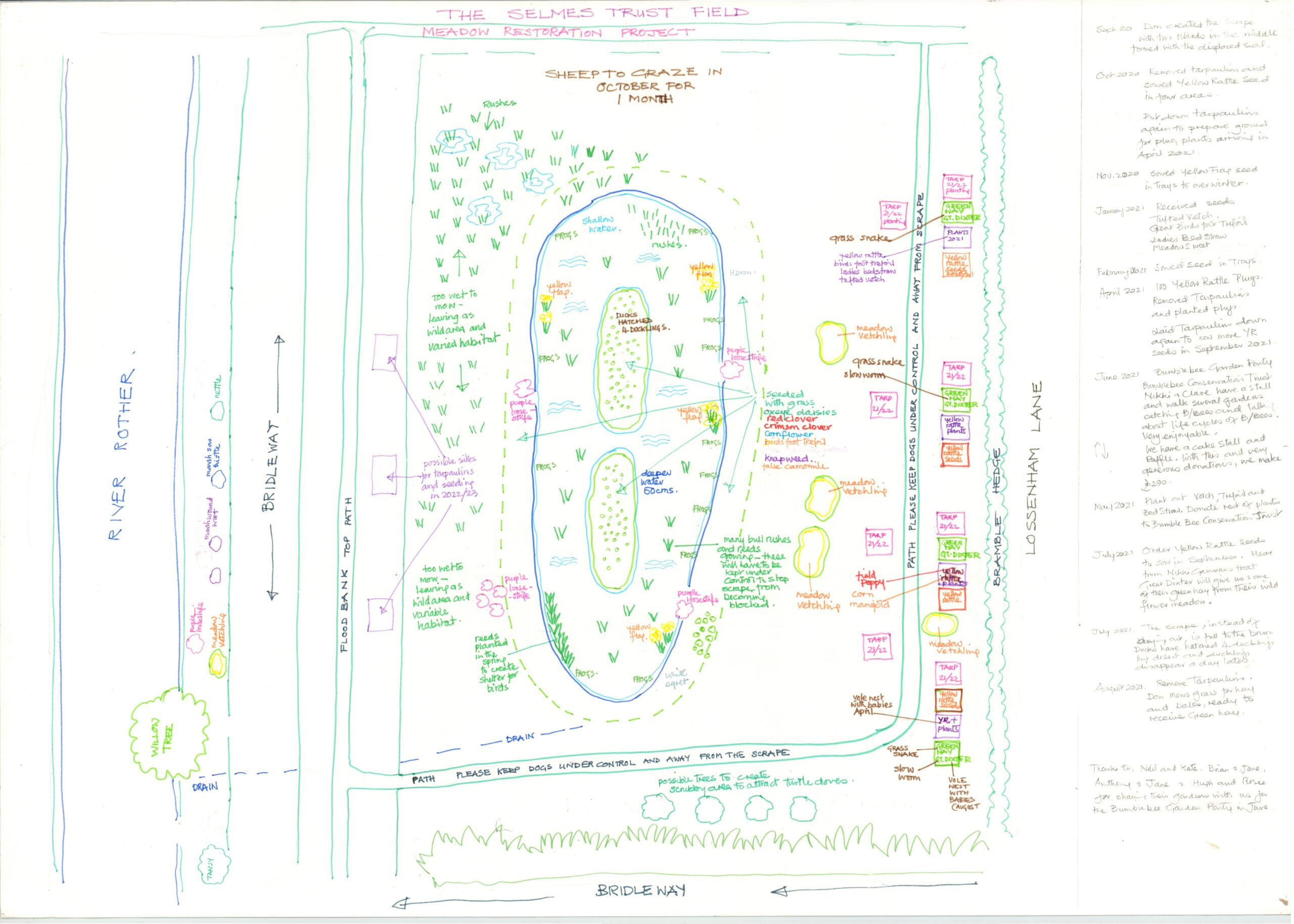
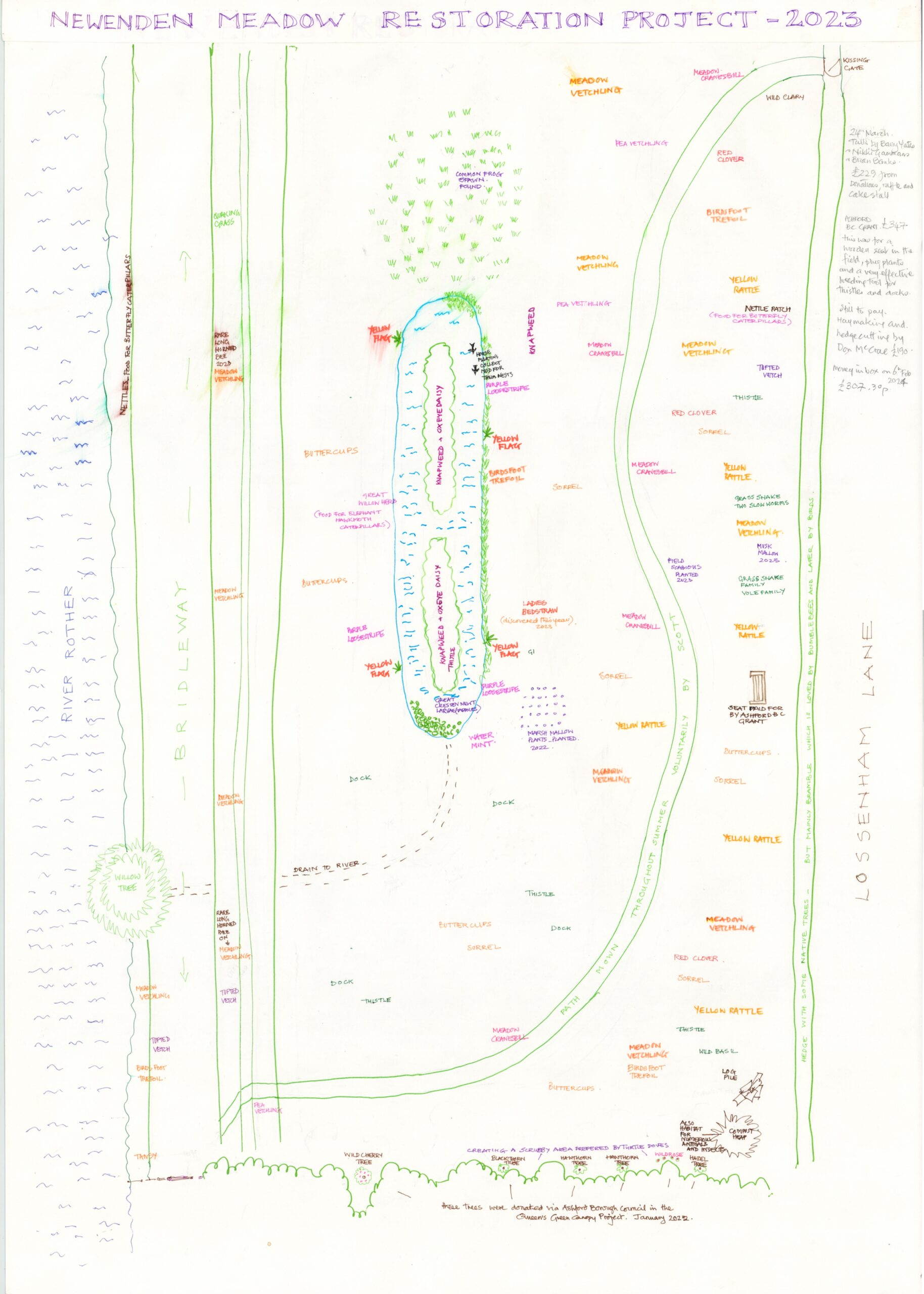
Each year, Jillian creates a hand-drawn map of the meadow — noting new species, wildflower patches, wetter ground, the scrape, and where plants are beginning to spread. These sketches show the restoration unfolding in real time.
Quiet moments gathered on walks through the field.
Jillian doesn’t only capture the meadow through her sketches but also through short reflections gathered on her walks — small details of colour, weather and movement that often pass unnoticed. Her notes follow the same pace as the field itself, shifting gently from week to week as plants emerge, settle and fade.
Our Instagram offer a simple way to see the meadow through her eyes, one moment at a time.