The plants and wildlife that shape the meadow through the seasons.
The meadow shifts throughout the year — from the first shoots of spring to the height of summer colour, into the soft tones of autumn and the quiet of winter. This page offers a simple view of what grows, moves and settles here, and how the field changes as the seasons pass.
Wildflowers & Grasses
A landscape that grows more varied with each year.
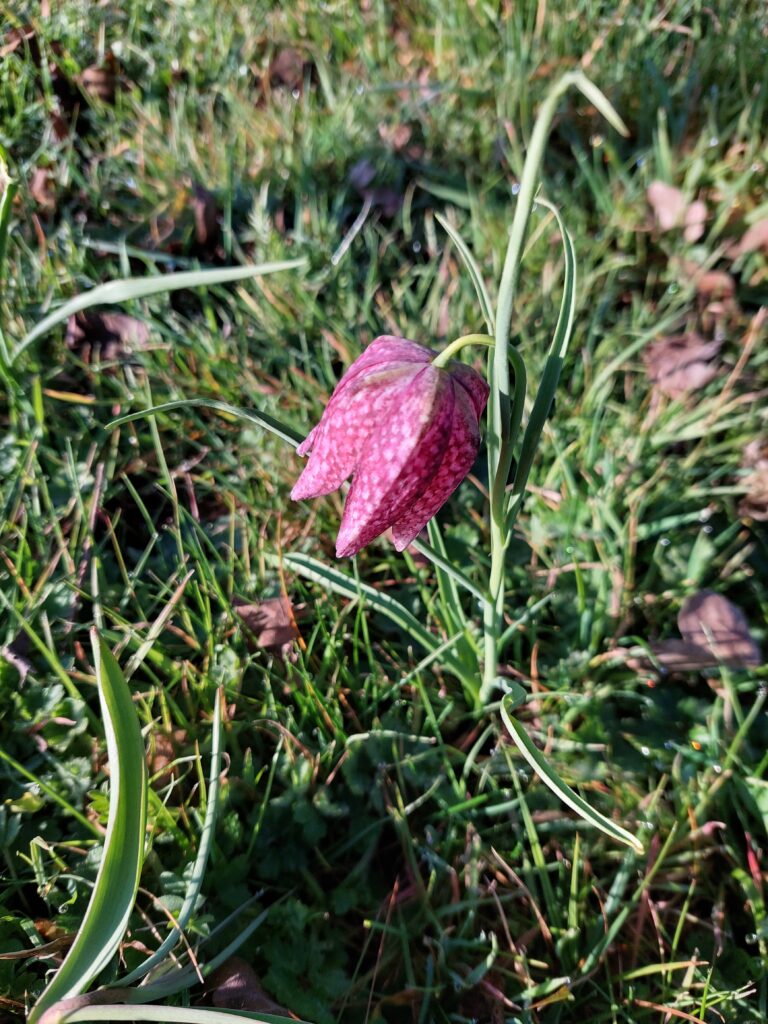
The wildflower mix has deepened with each season. Snakes-head fritillaries appear now in much greater numbers, gathering in gentle clusters through the wetter ground. Orchids — both green-winged and common spotted — return each spring, settling themselves in different parts of the field as the conditions shift.
Later in the year, meadow cranesbill, musk mallow, scabious and birds-foot trefoil open the field to summer colour. After each cut, new seedlings emerge, showing how the meadow continues to slowly rebuild its diversity. Grasses carry their own quiet story as they move from soft green to full height, then into the pale, dry tones of early autumn.
Bees & Other Pollinators
A gentle pattern of activity across the warmer months.
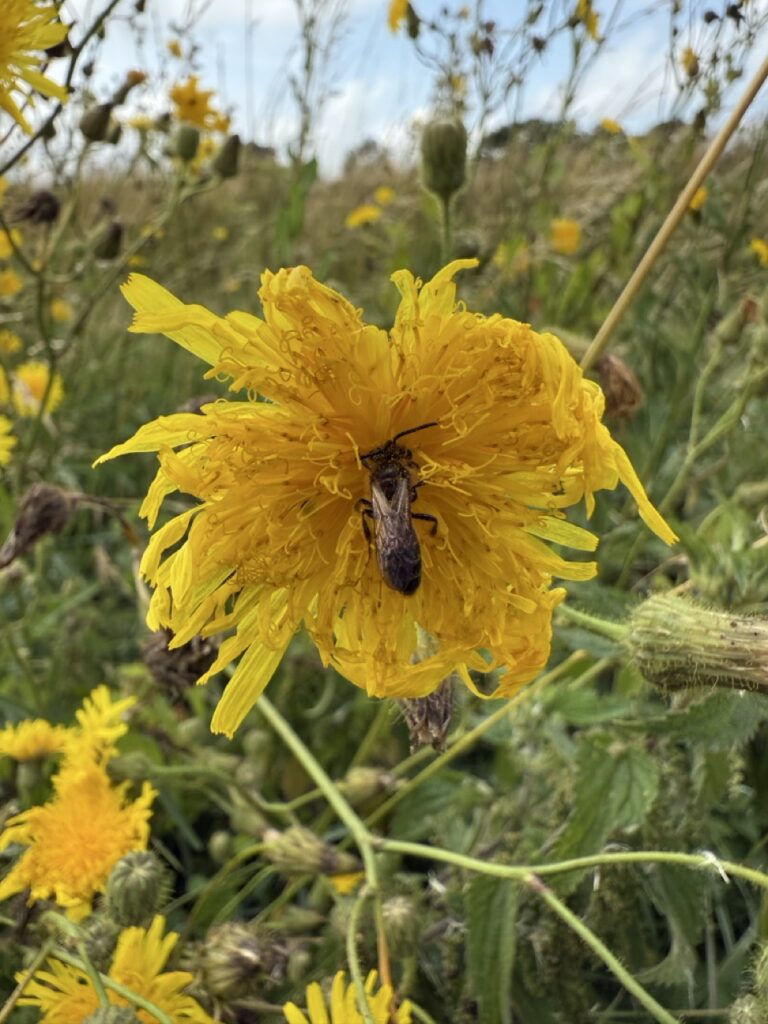
The earliest signs of life often come from the bees. Buff-tailed queens, early bumblebees and carders move through the field as spring settles in, exploring new flowers as they appear.
Through the summer, garden bumblebees and common carders become more frequent, though the rhythm of their numbers changes with each year’s weather. Their movement across the meadow offers a quiet indication of how well different areas are developing and which flowers are supporting them most.
Butterflies & Moths
Small flashes of colour in sunlit patches.
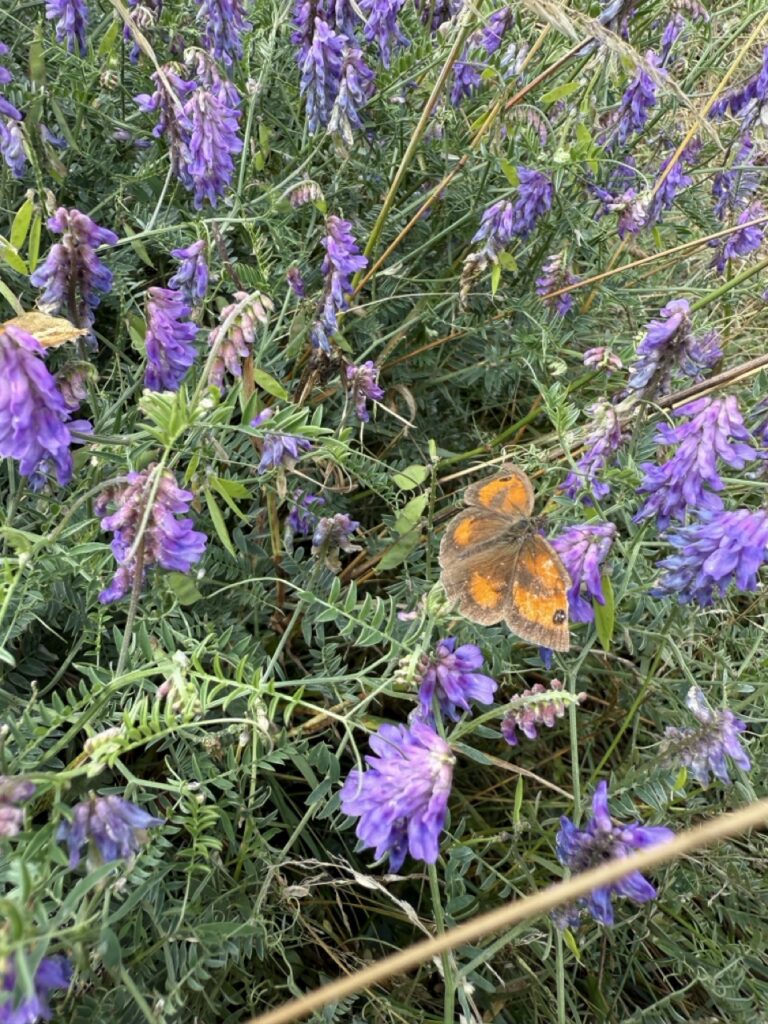
Common blues lift across the field where trefoil has taken hold, and six-spot burnet moths often appear in the height of summer.
Evening moth sessions reveal species that rarely show themselves during the day, adding a quiet layer of hidden activity to the field. Each year brings a slightly different mix, shaped by weather, flowering times and the slow shifts in plant life.
Birds & Seasonal Visitors
Brief appearances and returning patterns.
Birds move through the meadow in different ways. Some follow the hedgerows, others cross the open ground or pause near the wetter edges.
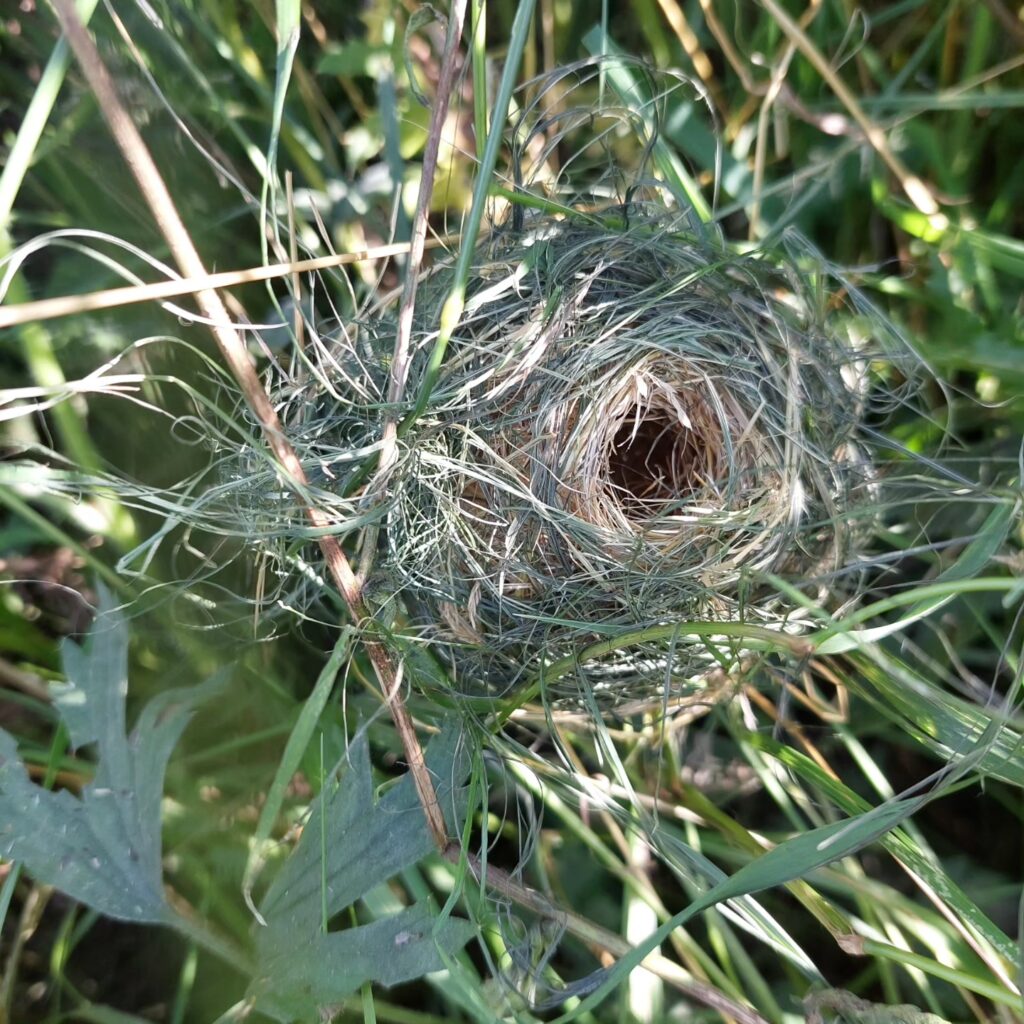
A short-grass patch at the eastern end has been shaped to mirror the feeding habitat needed by turtle doves — a small, hopeful experiment that may encourage passing birds to linger. We also have some small shy visitors hiding in the undergrowth, as can be seen from this elegant harvest mouse nest. Most sightings are brief, but each one adds to the quiet understanding of how the meadow is being used across the year.
Amphibians & Water Life
Life gathered around the wetter ground.
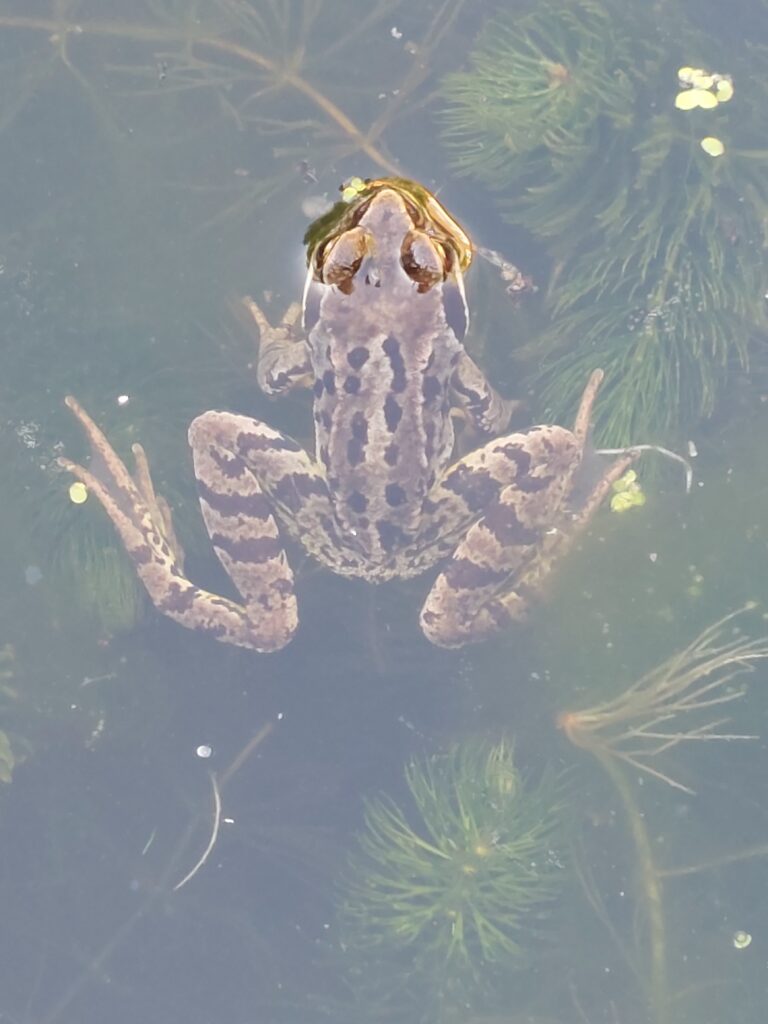
Each spring, frog spawn appears in abundance in the shallow water, spreading through the marshy areas before the tadpoles begin to move. Many are taken by predators, yet their early presence remains a clear sign of the meadow’s growing ecological variety.
In wetter periods, the ponds and edges of the scrape become busy with invertebrates and new plant growth, offering a different rhythm to the drier, more open parts of the field.
A Field in Motion
Small changes that add up over time.
Nothing here stays the same for long. Plants settle, spread or disappear; insects follow the rise and fall of warmth and rain; and each season lays the ground for the next. These slow, steady shifts show the meadow becoming a richer and more resilient place, shaped as much by weather as by care.
If you want to explore further our seasonal newsletters and Jillian’s Annual Meadow Sketches offer a fuller view of the species recorded in the meadow, the work carried out and the plans for the months ahead.